QUESTION:
I am looking for a natural way to help my mother. Her doctors think she has
Parkinson’s Disease but they aren’t sure. She has tremors in both of her
hands, and everyday activities are becoming more difficult for her. Can you
recommend some natural products that she can try? The drugs that her doctors
want her to take have too many possibilities for adverse reactions. If you can
help, I would appreciate it.
ANSWER:
Generally
the recommendations I have found are for nervous system relaxing herbs, vitamin
supplements and dietary advice. The following information is a summary of what I
found in each book.
Herbal
Tonic Therapies by Daniel Mowrey
speaks very highly of Lapacho known as an immune stimulant with far
reaching benefits for many different conditions including Parkinson's disease.
It makes a lot of sense to me and I have seen first hand how immune boosting can
help the body overcome problems in specific areas. I find it interesting to read
the various authors comments on the suspected causes of this condition. Heavy
metal poisoning is one of the possible causes and Lapacho has been documented to
be beneficial in combating poisons and toxins also. Ginkgo is another
recommendation found in this book as well as many other sources. Ginkgo is
famous for its ability to increase circulation to the brain. Mowrey cites a
study that where Ginkgo was given to patients with Parkinson's disease secondary
to cerebral arteriosclerosis. It did indeed increase blood supply to the brain
and improved its nutritional status. I have always felt that improved
circulation anywhere in the body promotes better health. Since this disease
involves degeneration of nerve cells in the brain it makes sense that increasing
circulation to the brain might be beneficial.
The
Herbal Drugstore by Linda White &
Steven Foster recommends Gingko as well, reporting that the increase of oxygen
to the brain inhibits the progress of dementia which can be a problem in the
late stages of Parkinson's. Grapeseed Extract is suggested for its
antioxidant action which they say "can help collect harmful byproducts of
the body's chemical processes that exist in brain tissue." Evening
Primrose Oil is high in the essential fatty acid, gamma-linolenic acid or
GLA and has been used as a clinical treatment for Parkinson's and other
tremor-causing disorders. White and Foster state the brain is composed primarily
of unsaturated fatty acids "giving a clue to potential botanical medicines
for disorders that affect brain chemistry." Doses should be 2 tablespoons
Evening Primrose Oil per day or 1500 to 2400 milligrams in capsules per day.
The
Green Pharmacy by James Duke includes
a fascinating entry about using food as medicine for Parkinson's. Fava Beans
are one of the best plant sources of a compound called L-dopa which is a natural
precursor of dopamine in the brain. Degeneration of brain cells in Parkinson's
can cause less production of dopamine. L-dopa is a standard pharmaceutical
therapy for this disease. Duke reports it takes a 16 oz can of Fava Beans to get
enough L-dopa to have an effect on Parkinson's. I highly recommend obtaining a
copy of this book for yourself to read the details of eating Fava Beans for this
purpose. He addresses many aspects including comparison of the cost of these
beans compared to the pharmaceutical drug, using the Fava Bean Sprouts which
contain 10 times more L-dopa, the other beneficial compounds in the beans,
beneficial effect of the high fiber content as constipation is sometimes a
common problem with this disease and he offers advice to dealing with gas
experienced when the diet is high in beans of any kind. He repeats the
recommendations for Evening Primrose Oil and Ginkgo and adds Passionflower and
St. John's Wort to the list.
Passionflower,
a nervous system relaxing herb, contains two helpful alkaloids harmine and
harmaline considered to be effective anti-Parkinson's compounds. Duke offers
another especially interesting bit of information about the curious fact that
smokers have an unusually low risk of Parkinson's. Nicotine increases the
release of dopamine in the brain. On the other hand the enzyme monoamine oxidase
(MAO) depresses dopamine. MAO inhibitors are common antidepressant medications
and logic leads us to believe these boost dopamine and decrease Parkinson's
risk. St. John's Wort is the most famous natural remedy for depression
and is considered a MAO inhibitor. I would definitely consider taking St. John's
Wort if it were me.
The
Clinicians Handbook of Natural Healing
by Gary Null is a compilation of scientific peer review studies of natural
supplements and their proven treatment values. Vitamin C and Vitamin E
have shown to be helpful in Parkinson's with some studies showing a significant
association between deficiency of these vitamins and Parkinson's. This book has
an interesting section called Activity/Plants where the following foods and
herbs are under the category "Antiparkinson's": Camu-camu, Acerola,
Broadbean (Fava Bean), Ben Nut, Sunflower, Buffalo Gourd, Cowage, Berro,
Asparagus, Black Cumin, Blackbean, Spinach, Chaya, Asparagus Pea, Jew's Mallow,
Soybean, Vinespinach, Swamp Cabbage, Pigweed. I'm not familiar with all these
plants but the list itself is intriguing.
Prescription
for Nutritional Healing by James and Phyllis Balch, commonly sold at
health food stores as well as bookstores, is very popular with the public. The
following statement these two authors make has even more impact after the
reading the list of food/plants above, "When the brain is not able to
manufacture dopamine, Parkinson's disease results. Malnutrition is believed to
be a major underlying factor." They give specific cautions of what vitamins
and food to avoid if taking the pharmaceutical drug levodopa for this condition.
They go as far as to say using Vitamin B6 (injection best) is
probably safer and is as effective as levodopa. Dietary recommendations are to
eat 75% raw foods with seeds, grains, nuts and raw milk.
Many
antispasm, nervous system relaxing herbs are recommended in several other herb
books: Passion Flower, Black Cohosh, Ginger, Lobelia, Scullcap, Valerian,
Damiana, Blue Vervain. All of these relaxing herbs are excellent but we have
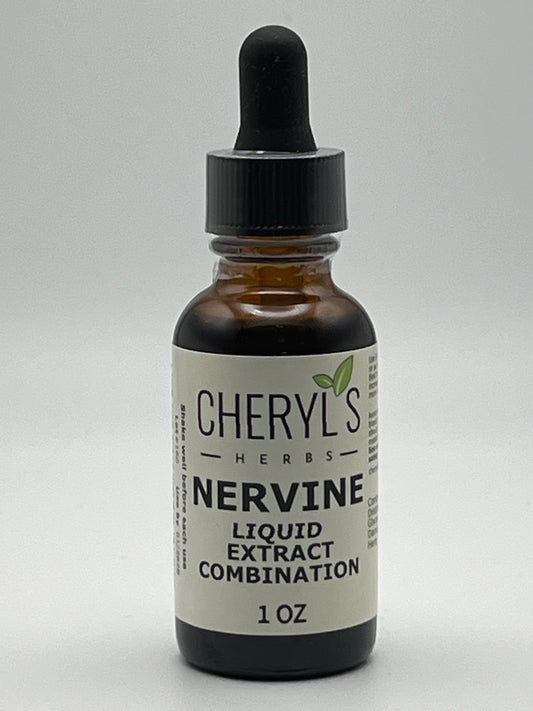
a product called Nervine Liquid Extract Combination: Blue Vervain, Damiana,
& Scullcap, which would be my first choice. This is not a recommendation
from me to you but if I were your mother, I would start with this one. It is a
recipe from the book Elementary Treatise in Herbology by Dr.
Edward E. Shook. The late Dr. Shook gave a series of lectures to medical doctors
in Berkeley, CA after World War II. His books Elementary Treatise in
Herbology and Advanced Treatise in Herbology are a
manuscript of these classes. Usually I only reference herb books based on modern
scientific research but I just love Dr. Shook’s lectures. Because he was
speaking to doctors his information was very specific referring to the naturally
occurring chemical constituents in herbs that help to explain and verify their
actions. While speaking of the "facts" of herbal medicine he was also
extremely passionate about what was obviously a subject very dear to his heart.
He was trying, actually pleading sometimes, to persuade them to not totally
disregard plant medicine. A subject very dear to my heart as well. Here is what
he said about this recipe, "This is one of the best nervine tonics ever
made and will overcome St. Vitus' Dance, ague, shaking and quaking of the limbs.
It is one of the safest and most effective female regulators for amenorrhoea and
dysmenorrhoea. Also a wonderful tonic for weak stomach, gas and flatus. A repeat
reference to previous lessons will give you a clear picture of what to expect
from its use. It is quite harmless and may be taken for a considerable length of
time, without injury to the most delicate system. It will keep indefinitely and
be always available." I know people who have used this to great success for
restless leg syndrome.
Well,
this is the best I have found for Parkinson's disease. I sincerely hope this
information will be of help to you. I hope it turns out that your mother does
not have Parkinson's and maybe natural remedies can help the symptoms she is
experiencing. Please make note of the botanical and safety Information below.
BOTANICAL
& SAFETY INFORMATION:
Black
Cohosh Root
Cimicifuga
racemosa
Avoid
when pregnant or nursing, limit use to 6 months.
Blue
Vervain Herb
Verbena
hastata
Avoid
during pregnancy
Damiana
Leaf
Turnera
aphrodisiaca
Safe
to consume when used appropriately.
Ginger
Root
Zingiber
officinale
Safe
to consume when used appropriately.
Ginkgo
Leaf
Ginkgo
biloba
Safe
to consume when used appropriately, possible concern with ingestion of blood
thinning medications but inconclusive.
Lapacho
Bark (Pau D'Arco)
Tabebuia
avelleneda
Safe
to consume when used appropriately.
Lobelia
Herb
Lobelia
inflata
Avoid
during pregnancy. Avoid large doses. May cause nausea and vomiting.
Passion
Flower Herb
Passiflora
incarnata
Safe
to consume when used appropriately.
Scullcap
Herb
Scutellaria
lateriflora
Safe
to consume when used appropriately.
St.
John's Wort Flower
Hypericum
perforatum
May
potentiate pharmaceutical MAO-inhibitors, fair-skinned people should avoid
excessive sunlight and tanning while using.
Valerian
Root
Valeriana
offinalis
Safe
to consume when used appropriately.
REFERENCES:
Balch,
James F. and Balch, Phyllis A. Prescription for Nutritional Healing.
Garden City Park, NY: Avery Publishing Group. 1997.
Campion,
Kitty. The Family Medical Herbal. London: Dorling Kindersley.
1988.
Duke,
James A. The Green Pharmacy. New York: St. Martin’s Paperbacks.
1998.
Hoffmann,
David. The Complete Illustrated Holistic Herbal. Shaftsbury, Dorsett:
Element Books. 1996.
Mowrey,
Daniel B. Herbal Tonic Therapies. New Canaan: Keats Publishing Co.
1993.
Shook,
Edward E. Elementary Treatise in Herbology. Banning, CA: Enos
Publishing Co. 1993.