Question:
What vitamins or herbs do you recommend for Epilepsy? I've been on Dilantin for
over 15 years and I still have occasional seizures.
Answer:
There is not a great amount of information about this topic in herb books. I did
find the same small group of herbs mentioned in several books. In some ways this
is comforting. Black Cohosh, Lobelia, Valerian, Scullcap were some of these
repeated in many references. I especially like the information in books
obviously based in scientific fact. I have plenty of faith in anecdotal evidence
especially when the information is from historical sources. I don’t think past
civilizations or generations would have bothered to pass on information about an
herb if it wasn’t actually effective as a remedy. For me though, when passing
on information to someone else I am much more comfortable using mainly
scientific sources. This puts you in a better position for example if you want
to share this information with your doctor.
Valerian
is currently one of the most popular orthodox antispasmodic medications in
Russia and Germany according to Daniel Mowrey author of Herbal Tonic
Therapies. It is its anticonvulsant action that has been useful in treating
epilepsy. My experience with herbs has shown what is a treatment for a condition
is quite often a preventative for the condition. I cannot give you advice
because I’m not a doctor but if it were me I would consider taking a small set
of herbs or just one herb on a regular basis in hopes of preventing or lessening
the severity of occasional seizures. Valerian looks good to me. Speaking of
prevention, Valerian was used in the First World War to prevent shell shock in
front-line troops. Valerian is a great herb to discuss here because it is
classified as a tonic herb. It can regulate and balance opposite extremes.
Recent research has shown it to be a sedative but more research has reported it
can also stimulate in a way as to improve coordination, increase concentration
and energy. This tonic nature of Valerian allows it to depress or stimulate
where necessary depending on the current needs of the nervous system. Another
way Valerian has been characterized by clinical studies is that it has
neurotropic effects directly on higher centers of the central nervous system.
One of the most remarkable aspects of Valerian is the almost total lack of
toxicity, even with long term use.
Clinical
studies have proven the antispasm action of Lobelia. Historically it has
been used to treat epilepsy. While I may not know of any recent studies done on
this herb for this condition, I would consider using it myself.
Chinese
Ginseng, perhaps the most famous medicinal plant of
China, is considered a tonic to whole body and has folk use for this condition.
Mistletoe
has a historical use for epilepsy but no recent studies that I know of have
focused on this condition. Hippocrates claimed it was highly effective remedy
for the spleen and some modern European physicians believe treating the spleen
may be beneficial in epilepsy. Sir John Colbatch, an English Physician in 1720
wrote a small publication titled The Treatment of Epilepsy by Mistletoe.
There has been confusion about the toxicity of this herb but paying attention to
the correct botanical and current safety warnings, the herb can safely be used.
Motherwort
was used to calm epileptics during the 17th century and now is used as a nerve
tonic and sedative. Current evidence has confirmed its benefits as a cardiotonic
and hot-water extracts also show sedative and anti-epileptic effects in animals.
Extracts
of Mugwort have been injected into laboratory animals confirming its
sedative effects so researchers conclude it is possible the herb could be
beneficial for epilepsy. Mugwort has been used for this condition.
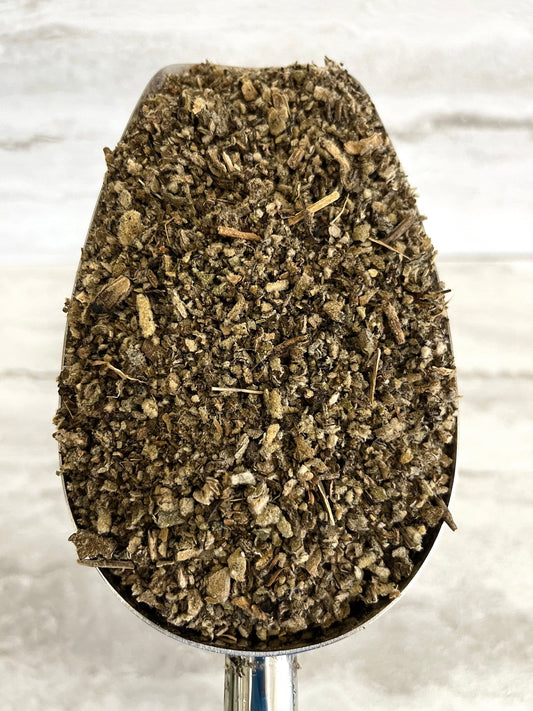
Sage
is famous throughout history in many different cultures as a miracle herb. A
constituent in a Chinese variety Salvia militiorrhiza may become the
source of a new tranquilizing agent but without the side-effects of Valium.
Valium and Librium are benzodiazepines which are widely prescribed since 1960 to
treat epilepsy. Benzodiazepines act on the central B2 receptors in the central
nervous system. The herb compound also interacts with the central B2
receptors.
Scullcap
has always been known as a mild and safe nervine. Traditionally it has been used
for delirium tremens, St. Vitus’ dance, convulsions, seizures, hysterical
states, lockjaw, tremors and epilepsy.
Blue
Vervain is worth mentioning here after reading old
American herb doctors tales of their successes with stubborn cases of epilepsy.
Blue Vervain is another wonderful herb nervine use by many cultures all over the
world. It is an American Indian remedy for several diseases including nervous
afflictions.
Black
Cohosh is so highly recommended in numerous respected
publications. Like many of the herbs I have already mentioned it’s considered
a sedative and antispasmodic and has been extensively used for epilepsy. I know
the wonderful effects this herb provides our customers for a variety of
conditions. This one would be a definite choice of mine.
Herbs
have a balancing effect on our systems allowing the use of these kind of
relaxing herbs mentioned above, to be used during the day without excessive
drowsiness. I am a professional musician as well as an herbalist and for more
high pressure concerts I sometimes use Valerian extract before the performance
to keep me relaxed and breathing deep. In a situation like this, there is no
danger of me falling asleep on stage and the herb just takes the edge off my
nervousness. However, I would not take this herb before driving long distances
on a road trip for example. I would be concerned it would make me feel too
drowsy sitting hour after hour behind the wheel of a car. When in a relaxed
state, like before bedtime, Valerian can really help as a sleep aid.
Vitamins
and foods have been clinically studied for their beneficial effects on epilepsy.
Vitamins especially B1 and E have shown good results. Foods that are
clinically classified as antiepileptic are: asparagus, carob, wheat, ben nut,
white lupine, Chinese cabbage, soybean, chives, buffalo gourd, groundnut,
butternut, almond, opium poppy, tomato, Italian stone pine, chaya, cowpea,
blackbean, pignut hickory, white mustard.
I
sure do hope you have success with natural remedies. It is always advisable to
consult your doctor about a new herbal regimen.
BOTANICAL
& SAFETY INFORMATION
Black
Cohosh Root Cimicifuga
racemosa
Avoid
when pregnant or nursing, limit use to 6 months.
Blue
Vervain Herb Verbena hastata
Avoid
during pregnancy
Ginseng
Root (Chinese) Panax ginseng
Some
authorities suggest to avoid during high blood pressure.
Lobelia
Herb Lobelia inflata
Avoid
during pregnancy. Avoid large doses. May cause nausea and vomiting.
Mistletoe
Herb Viscum album
Do
not exceed recommended dose, avoid during protein hypersensitivity,
chronic-progressive infections such as tuberculosis and AIDS. Do not take with
MAO-inhibitors. It is advised that blood pressure be checked regularly by those
consuming the tea. Standard Dose: 2.5 grams, infused in cold water for 10 to 12
hours, up to 2 times daily.
Motherwort
Herb Leonorus cardiaca
Avoid
during pregnancy.
Mugwort
Herb Artemesia vulgaris
Avoid
during pregnancy.
Sage
Leaf Salvia officinalis
Avoid
during pregnancy. Not for long term use, do not exceed recommended dose.
Standard Dose: 4.0-6.0 grams daily.
Scullcap
Herb Scutellaria lateriflora
Safe
to consume when used appropriately.
Valerian
Root Valariana offinalis
Safe
to consume when used appropriately.
REFERENCES:
Balch,
James F. and Balch, Phyllis A. Prescription for Nutritional Healing.
Garden City Park, NY: Avery Publishing Group. 1997.
Blumenthal,
Mark., et al Ed. The Complete German Commission E Monographs.
Austin: American Botanical Council. 1998.
Hoffmann,
David. The Complete Illustrated Holistic Herbal. Shaftsbury,
Dorsett: Element Books. 1996.
McGuffin,
Michael, et al Ed. American Herbal Products Association’s Botanical
Safety Handbook. Boca Raton: CRC Press. 1997.
Mowrey,
Daniel B. Herbal Tonic Therapies. New Canaan: Keats Publishing Co.
1993.
Murray,
Michael T. The Healing Power of Herbs. Rocklin, CA: Prima
Publishing. 1991.
Null,
Gary. The Clinicians Handbook of Natural Healing. New York:
Kensington Books. 1997.
Shook,
Edward E. Advanced Treatise in Herbology. Beaumont, CA: Trinity
Center Press. 1978.
Weiner,
Michael A. and Janet A. Weiner. Herbs That Heal. Mill Valley:
Quantum Books. 1994.