



Essential
Oil Profile
Aniseed
by
Jeffrey
S. Hoard
Common
Name: Anise, Anise Seed, Aniseed
Latin
Binomial:
Pimpinella anisum
Family: Apiaceae
(Umbelliferae)
Other
Common Names: Anisum officinalis, Anisum vulgare
Part
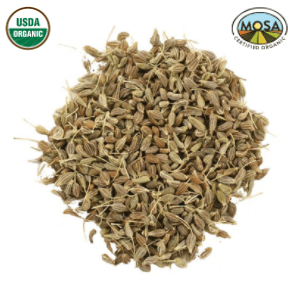
Used: Seeds, dried and crushed.
Production
Method: Steam distillation.
Countries
of Origin: Native to the eastern Mediterranean region and Southwest
Asia. Poland and Russia are among the largest producers of Aniseed oil from
locally grown fruits.
Typical
Constituents: a-pinene
(0.17%), camphene (0.07%), b-pinene
(0.01%), linalool (0.18%), cis-anethole (2.29%), trans-anethole (85%), safrole
(0.58%), anisaldehyde (0.91%), acetoanisole (0.94%).
Description
of Oil: Clear to pale yellow. Intense, spicy, sweet scent similar to
fennel.
Description
of Plant: An herbaceous annual grows to about 1 meter, with delicate
leaves and white flowers.
Hystory,
Folklore and Myth: Anise seeds were
a highly-prized commodity in ancient Egypt, Greece and Rome. The Greeks used the
seeds for the treatment of coughs, colds and even bad dreams.The essential oils
has long been used for the treatment of dry, irritable coughs, bronchitis and
whooping cough.
Aniseed
tea was used for infant catarrh, flatulence, colic and griping pain. In Turkey,
a popular alcoholic drink is made from the seeds. In tibetan medicine, a blend
of aniseed and nutmeg oil is used in a lotion for anxiety, depression and other
neurotic symptoms.
Properties
and Uses: Antiseptic, antispasmodic, carminative, diuretic,
expectorant, galactagogue, stimulant, stomachic. To clear the head and
strengthen the nerves, a few drops may be used in a vaporizer. Use up to 5 drops
in s bath for nervous headaches, anxiety, stress, insomnia and general
exhaustion.
Aniseed
oil may be used to relieve dyspepsia, colic and flatulence. For a soothing
massage to relieve digestive problems, blend with the antispasmodic properties
of peppermint and nutmeg.
Aniseed
oil is also recommended for nauseous migraines, palpitations of the heart and
any breathing difficulty due to bronchial spasms.
Aniseed
blends well with bay, cedarwood, eucalyptus, dill, fennel, ginger, mandarin,
petitgrain, peppermint, rosemary and spearmint.
Precautions
and Contraindications: Tested non-toxic
at low levels. Should not be used when pregnant, breastfeeding or by children. Possible skin

irritant, sensitizing.
The
major constituent of aniseed oil, trans-anethole, is known to cause dermatitis
in some individuals, so avoid in allergic and inflammatory skin conditions.
Also, due to the estrogen-like action of trans-anethole one should avoid aniseed
oil during pregnancy and with endometriosis or estrogen-dependant cancers.
Other
Interesting Information: Below 59° F aniseed oil will begin to congeal to a crystalline mass which begins to melt above that

temperature and completely liquefies at around 64 to 68° F. An oils
exposed to light or air for long periods.
One should note the
difference between Chinese Star Anise (Illicium verum) and Anise (Pimpinella anisum) which Guenther describes as having a finer and more delicate flavor. The inferior Star Anise is often used to adulterate
Pimpinella anisum.
References:
Arctander,
Steffen. Perfume and Flavor Materials of Natural Origin. Carol Stream,
Illinois: Allured Publishing Corporation. 1994.
Battaglia,
Salvatore. The Complete Guide to Aromatherapy. Virginia,
Queensland: The Perfect Potion. 1995.
Guenther, Ernest. The Essential Oils, v 4.
Malabar, FL: Krieger Publishing Company. 1950.
Sheppard-Hanger,
Sylla. The Aromatherapy Practitioner Reference Manual, Vol. 1, Vol.
2. Tampa: Atlantic Institute of Aromatherapy. 1997.
Tisserand,
Robert, and Tony Balacs. Essential Oil Safety: A Guide for Health Care
Professionals. Edinburgh: Churchill Livingstone. 1995.
Back
to Top
© 2008 Cheryl's Herbs. All Rights
Reserved.